Best Time to Visit the Great Barrier Reef
- Written by Allie Brown
- Last Updated July 7, 2026
There is no bad time to visit the Great Barrier Reef.
No matter what the weather, there’s always something to see and do.
Most travellers to the Great Barrier Reef think it’s a dry season only destination. It’s the peak time of year for a reason, but don’t let that deceive you into thinking the months either side don’t have their appeal.
To be honest, the shoulder seasons can be the best, with great weather and fewer tourists. The wet season too is an amazing time to visit the Great Barrier Reef and nearby mainland, as it’s when the landscape is at its most lush and the waterfalls are roaring.
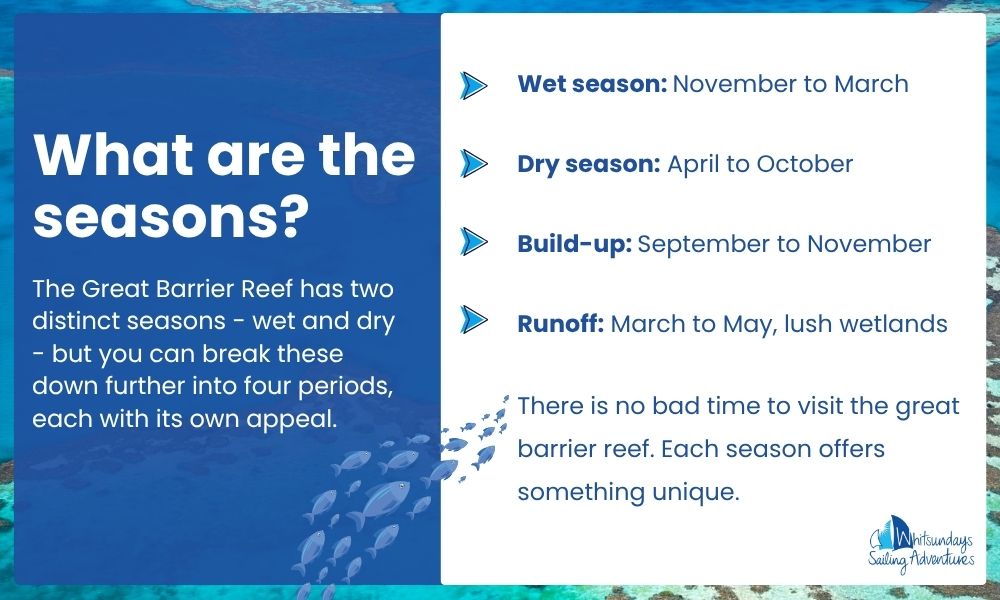
What are the seasons in the Great Barrier Reef?
The Great Barrier Reef has two distinct seasons. The wet season, which goes from November to March, and the dry season that spans the months of April to October.
The Great Barrier Reef, spanning over 2,300 km along Australia’s northeastern coast, is the planet’s largest living structure. It stretches from the Torres Strait in the north down to Lady Elliot Island near Bundaberg. As such, the weather patterns vary considerably between what the northern reaches experience, compared to the south. The Whitsundays sits right in the heart of the Great Barrier Reef, about 700 km below Cairns and roughly in the middle of the Queensland coastline.
You can actually break the seasons of the Great Barrier Reef down further into four periods. Firstly, there’s the build-up, which is typically September to November. This is when the humidity is climbing and ‘building up’ to the wet.
From December to February is the wet season, when the afternoon storms bring relief from the heat and humidity of the day. March to May is the runoff, when the flooded wetlands and swollen rivers drain into the sea. Lastly, June to August is the dry season, with its cooler days and clear waters.
When is peak season on the Great Barrier Reef?
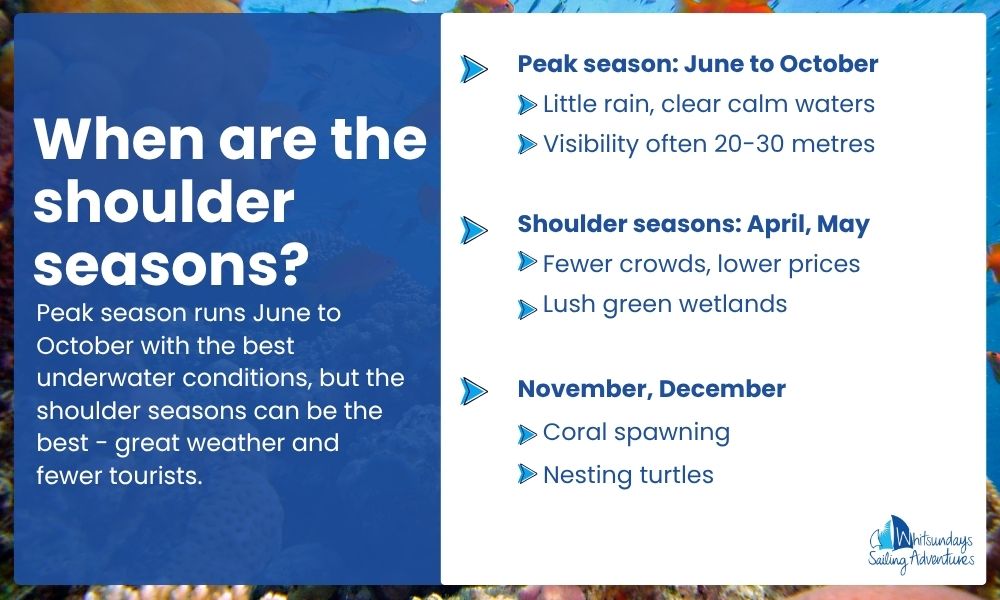
The peak season in the Great Barrier Reef is the months from June to October, which coincides with the region’s dry, winter period.
It’s called the dry season for a reason. June to October is when there’s little rain, it offers the absolute best conditions for water sports like snorkelling and scuba diving, with low humidity and clear, calm waters.
Underwater visibility during dry season on the Great Barrier Reef is often 20 to 30 metres, making a swim on the reef a truly memorable experience.
When are the shoulder seasons in the Great Barrier Reef?
The two months either side of the peak season are considered the shoulder periods or the shoulder seasons.
April and May are when the wet season rains have finished and the wetlands are full and lush green. The coastal waters start to clear and the temperature and humidity begin to drop. November and December see rising temperatures and humidity. In contrast are the falling crowds and coupled with that, reduced prices for things like accommodation and some tours. On the reef you may also encounter a coral spawning event and nesting turtles.
Considerations for travel to the Great Barrier Reef in peak season
In the peak season, the key considerations are crowds and increased accommodation costs/fewer options available.
As it’s the busiest time of the year to be visiting the Great Barrier Reef, accommodation, restaurants and tours may book out early. To avoid disappointment, you will need top plan your daily activities well in advance. You can also expect to pay a higher rate for hotels and resorts, with prices reflecting the popularity and limited vacancies at the time.
The peak season also coincides with the coolest months of the year and best visibility. Being in the tropics, it’s still comfortable, but the water temperatures may mean you will need a wetsuit to stay warm if you’re planning long days in the sea. The great clarity also draws lots of snorkelers and divers to the reef. This adds to the need to book reef adventures early.
Are there stingers in the Great Barrier Reef in peak season?
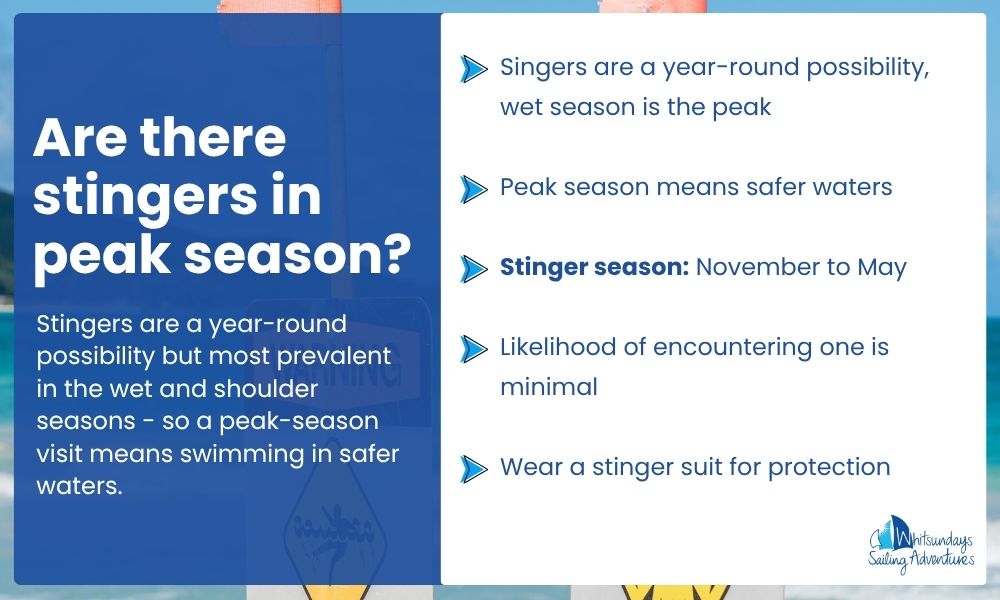
Stingers are a year-round possibility in the Great Barrier Reef, however they are most prevalent during the wet and shoulder seasons. So a visit during peak season will see you swimming in safer waters.
The wet season and month or two either side, November to May, is when the warmer waters and calmer ocean conditions are ideal for deadly stingers, like box jellyfish and irukanjie. But while this may be considered stinger season, the likelihood of encountering one is very minimal. Plus, if you wear a stinger suit, you’ll have an even more reduced chance of a sting. To put the low risk into context, only one person is killed by a stinger in Australia every 3 or 4 years. And when you consider their habitat spans a vast area across the entirety of the north of the continent, you’ve got little risk of a sting.
Things to do in the Great Barrier Reef in peak season?
The Great Barrier Reef is a water-lover’s paradise. It’s a place you visit to indulge in the beautiful climate, spectacular beaches and the glory of the World’s largest coral reef system.
Swimming, snorkelling, scuba diving, kayaking, fishing, sailing and sunbaking are just a few of the outdoor activities you can enjoy in the Great Barrier Reef. There are islands to explore, turtles nesting and migrating whales. Then if you want a break from the water sports, visit Airlie Beach or one of the mainland towns along the coastal fringe and enjoy some Queensland hospitality.
Other Local Guides