Whitsundays Marine Life: What You’ll See When Snorkelling
- Written by Allie Brown
- Last Updated August 24, 2026
The Whitsundays is one of the most famous snorkelling destinations in the world. Clear turquoise waters, warm climate, and the iconic location at the heart of the Great Barrier Reef, there are more than 74 islands with spectacular coral reefs to be discovered snorkelling the Whitsundays.
So, what can you expect to see? From turtles to reef sharks, here are some of the incredible local marine life you can expect to meet while snorkelling beneath the surface.
1. Coral
The Great Barrier Reef is the world’s largest coral reef ecosystem, with both hard and soft corals in brilliant colours, shapes, and sizes.
Amidst the hundreds of vibrant coral species, snorkellers can expect to swim by beautiful staghorn, brain, and elkhorn corals, and explore breathtaking formations spanning from the inner fringes to the outer reef.
The beauty of the Whitsundays is that you don’t need to travel very far from the shore to see some of the best coral beds. Blue Pearl Bay and Catseye Beach are perhaps the best areas for beach snorkelling. Langford Island also offers a unique experience when accessed by boat.
2. Sea Turtles
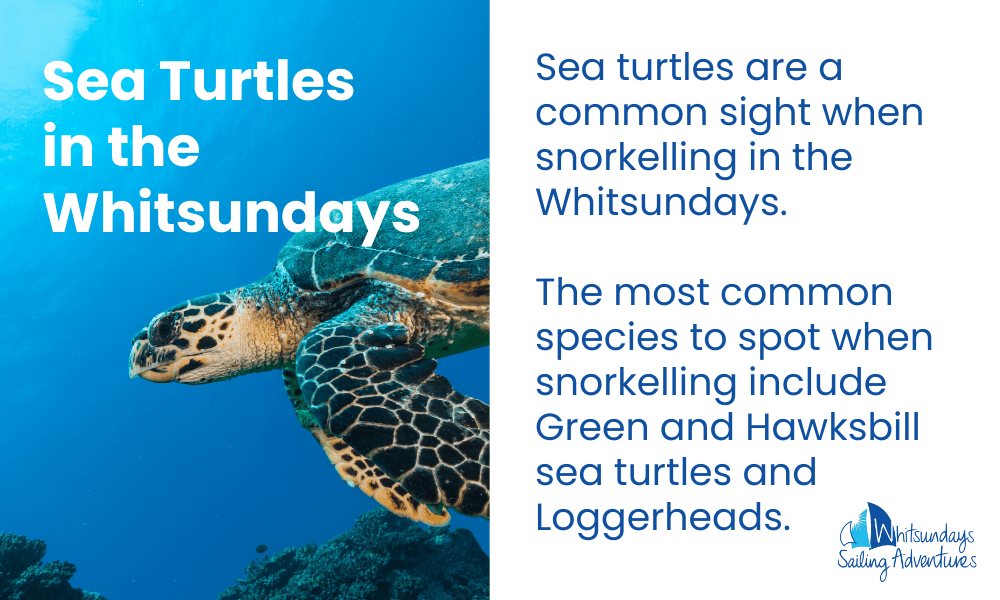
If you’re snorkelling in the Whitsundays, you’re very likely to encounter a turtle. They can be found pretty much anywhere around the islands, and the most commonly spotted species include green sea turtles, hawksbill sea turtles and loggerheads.
These gentle creatures love swimming in shallow areas where they can feast on seagrass, so Tongue Bay, which is located next to Whitehaven Beach, is one of their favourite spots.
Sea turtles are an endangered species due to threats to their habitat from humans, pollution, and climate change. So while visitors will flock to swim with them, authorities ask that you don’t touch them or their habitat and ensure your presence does not disturb their natural behaviour.
3. Maori Wrasse
Humphead Maori Wrasse are common in the Whitsundays, and they are so friendly that they will often swim over to greet snorkellers.
Famous resident Maori Wrasses include “George”, who is often seen swimming around Manta Ray Bay, and playful “Elvis”, who has made Blue Pearl Bay his home.
Humpheaded wrasse often stay in the same area for years, so these gentle giants have become somewhat local celebrities.
4. Tropical Fish
The Whitsundays is home to more than 1600 species of colourful, tropical fish, such as clownfish, coral trout, fusiliers, parrotfish, angelfish, butterflyfish, and many, many more.
5. Reef Sharks
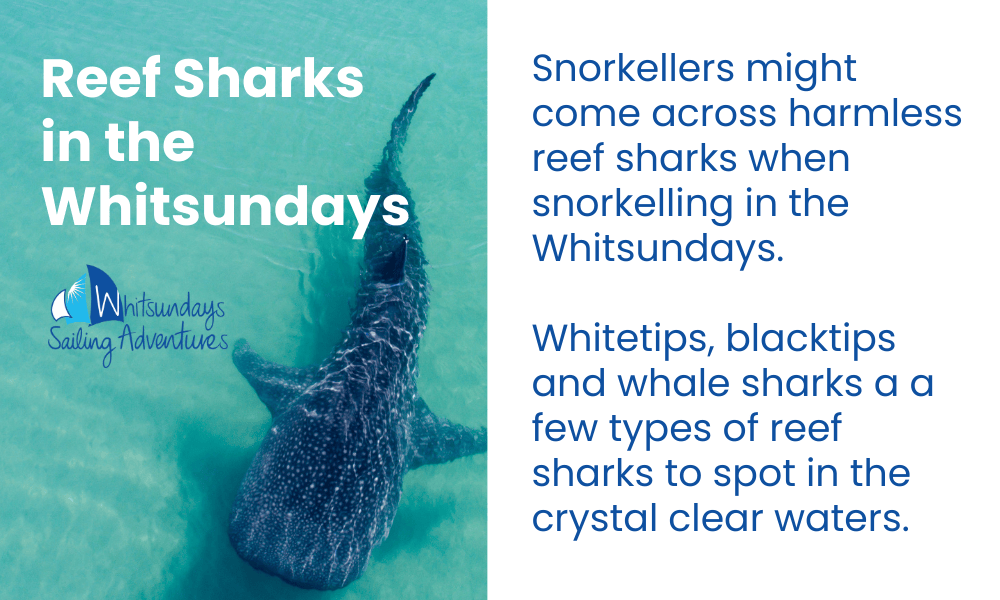
Yes, that’s right – there are sharks in the Whitsundays. Snorkellers may encounter harmless reef sharks while exploring the crystal-blue Whitsundays waters.
Whitetips, blacktips, epaulette sharks, whale sharks, and wobbegong sharks are often seen at the shallow fringing reefs which surround the Whitsunday Islands and the Outer Great Barrier Reef. Reef sharks are harmless and will generally swim by without paying you any attention!
6. Manta Rays
Manta rays can be seen around Manta Ray Bay on Hook Island during the cooler months from May to September.
The large, graceful rays are incredibly curious and have been known to swim close to the surface to check out boats and swimmers. While their huge size (sometimes up to 8 metres wide) can be intimidating, manta rays are gentle creatures and generally feed on plankton.
Other rays you could see in the Whitsundays include spotted eagle rays and stingrays, especially near Whitehaven Beach. While these rays are generally harmless, they do have venomous stingers, so they should be observed with caution.
7. Dugongs
Dugongs are often spotted in shallow bays around the Whitsunday Islands, particularly off Dugong Beach. Dugongs are sometimes called sea cows due to their large size of about 3 metres in length and up to 400kg in weight.
Dugongs are a species of conservation concern and the Great Barrier Reef is one of the world’s most important habitats. They are protected under Australian law and conservation efforts are in place to try to save them from extinction.
8. Jellyfish
Blue bottles and box jellyfish are common in the Whitsundays during stinger season (September to May), so it’s recommended to wear a stinger suit if snorkelling during these months.
9. Starfish, Sea Cucumbers & Sea Urchins
The Whitsundays and the Great Barrier Reef contain 630 species of echinoderm, including starfish (often called sea stars), sea cucumbers, and sea urchins. These colourful marine animals are commonly seen around the reef or moving slowly along the ocean floor.
10. Giant Clams & Other Molluscs
The Great Barrier Reef is known to have 3,000 species of molluscs, including giant clams, mussels, snails, colourful sea slugs, octopi, and squid. Some giant clams can be so big that they span up to a metre long and are easily spotted thanks to their shimmering blue exterior which reflects sunlight.